Category: Startups

We put the spotlight on innovative tech startups in Ghana, Nigeria, South Africa and the rest of Africa. Send us an email to get featured.

  • MyFoodAngels Goes Green with Sustainable Packaging and Refill Options

    MyFoodAngels Goes Green with Sustainable Packaging and Refill Options

    MyFoodAngels, the grocery delivery startup known for farm-fresh foods and personalized meal recommendations, is taking a big step towards sustainability by rolling out eco-friendly packaging.

    The company has been experimenting with ways to cut down on plastic use while staying aligned with global sustainable development goals. According to CEO Olapeju Umah, one major concern is the waste generated by single-use packaging.

    “Imagine someone bought five kegs of five-litre palm oil from us over the last five months,” Umah explained. “That would leave them with more kegs to trash.”

    To tackle this, MyFoodAngels is introducing reusable packaging and refill options. Customers who opt for palm oil refills, for example, can save money—getting a litre for ₦3,850 instead of ₦4,000. When checking out on the website, they can choose to refill their existing container rather than buying a new one each time.
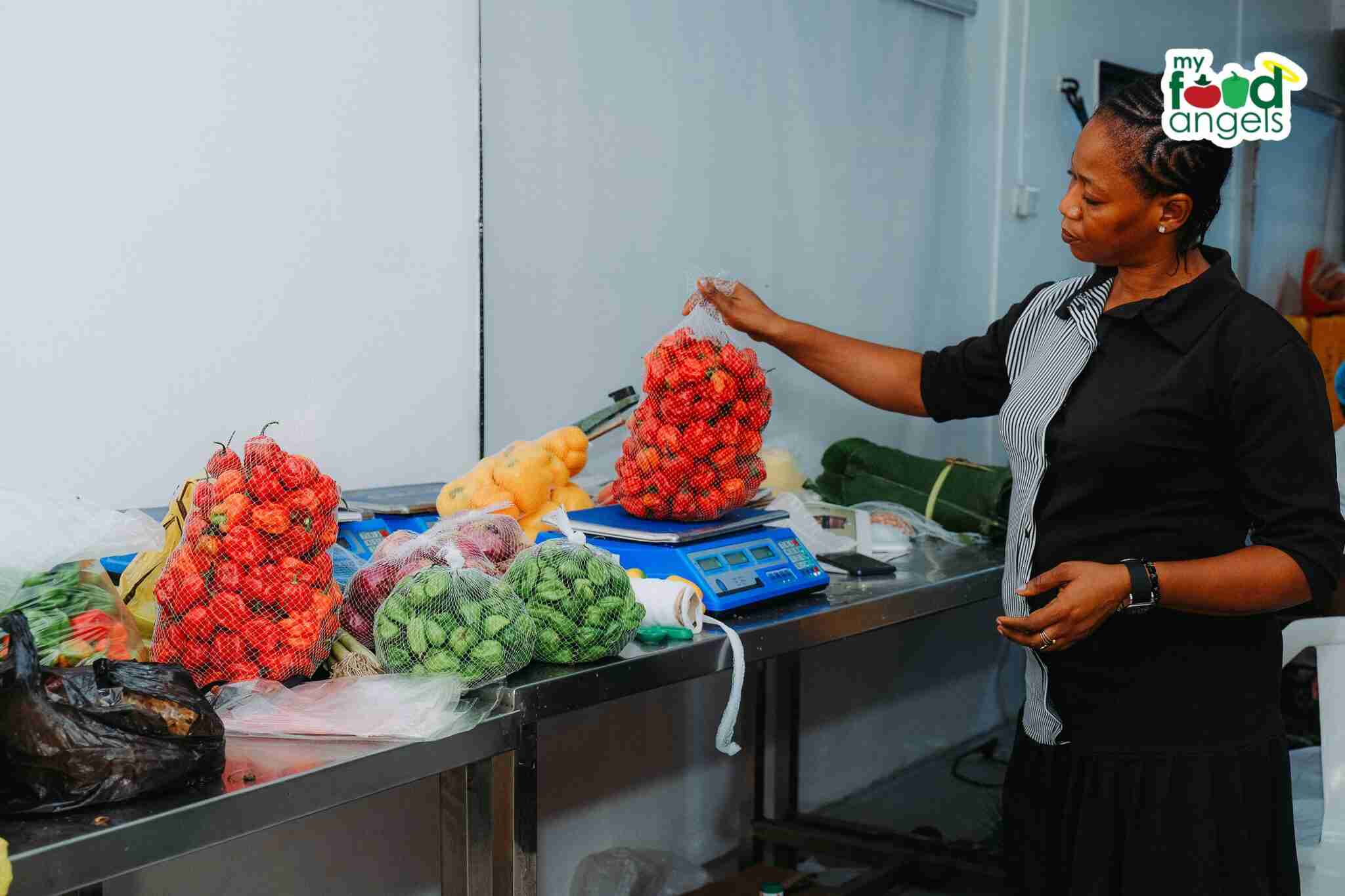
    MyFoodAngels

    Another initiative is the crate return system for eggs. Instead of accumulating unnecessary egg crates at home, customers can return them after use. “You do not need more egg crates at home to add to the previous ones. We will supply you and take back our crates,” Umah said.

    Looking ahead, the company is also testing biodegradable plastics as a long-term solution, aiming to be the first grocery delivery platform in Nigeria to make a full pivot to sustainable packaging. While palm oil and eggs are the first products to benefit from these changes, MyFoodAngels is working on similar solutions for other grocery items.

    Beyond sustainability, the company has been growing fast. Its gross merchandise value (GMV) has quadrupled in the past year, and in 2024 alone, it served over 50,000 customers. MyFoodAngels has built a strong presence in Lagos by working closely with local farmers and running an in-house palm oil milling operation. Its supply chain delivers fresh groceries like tomatoes, bell peppers, palm oil, and protein directly to both restaurants and individual customers.

    Now, the startup is seeking $500,000 in funding to expand beyond Lagos, develop new products in the fisheries sector, and launch its mobile app, which is currently in beta testing. The app is expected to simplify the ordering process and drive even more growth.


  • How Nigeria’s $40M Startup Fund Aims to Fuel Tech Innovation

    How Nigeria’s $40M Startup Fund Aims to Fuel Tech Innovation

    The Nigerian government is stepping up its support for tech startups with a new $40 million fund aimed at early-stage companies.

    For years, Nigeria’s booming tech scene has relied on private investors, but this move signals a more structured government-backed approach to fueling innovation.

    Nigeria has been the dominant startup hub in Africa, attracting over $2 billion in funding between 2015 and 2022. This fund is a major step under the 2022 Nigeria Startup Act, designed to keep the momentum going and provide a clear investment framework for emerging companies.

    The Breakdown

    So, where’s the money coming from? Here’s how it’s structured:

    SourceContribution
    Japan International Cooperation Agency (JICA)$20 million
    Nigeria Sovereign Investment Authority (NSIA)$20 million

    The NSIA, which manages over $2 billion in Nigeria’s sovereign wealth, will be in charge of the fund as outlined in the startup law. According to Kashifu Inuwa Abdullahi, the head of the National Information Technology Development Agency (NITDA), the final agreement is set to be signed next month.

    Putting It Into Perspective

    Nigeria has already produced some of Africa’s biggest tech successes. Companies like Paystack (acquired by Stripe), Flutterwave, Andela, and Opay all reached billion-dollar valuations, largely driven by their operations in Nigeria. The startup law aims to build on this by creating a smoother, more predictable path for new startups to thrive.

    What’s Already Happening

    One major outcome of the startup law is the formal registration of around 13,000 businesses as startups under NITDA’s guidelines. These registered startups enjoy perks such as:

    • A three-year income tax exemption
    • Tax credits for their investors

    These incentives are designed to ease financial pressures on new businesses and encourage more investment in Nigeria’s growing tech ecosystem.

    What Comes Next

    While the fund is a promising step, awareness remains a challenge. Many entrepreneurs across Nigeria still don’t know about these opportunities. To address this, NITDA plans to visit all 36 states and Abuja before the end of the year, ensuring that startups nationwide can access the fund and other benefits.

    With structured government backing, tax incentives, and a growing pool of startups, Nigeria’s tech ecosystem is set for another big leap forward. The key question now is whether awareness efforts will be enough to help entrepreneurs take full advantage of these opportunities.

  • Ex-Bundle CEO Emmanuel Babalola Joins Fincra as Chief Commercial and Growth Officer

    Ex-Bundle CEO Emmanuel Babalola Joins Fincra as Chief Commercial and Growth Officer

    Fincra, a leading B2B payment infrastructure provider, has appointed Emmanuel Babalola as its new Chief Commercial and Growth Officer. This move comes as the company refines its strategy to scale cross-border transactions and expand its reach.

    Babalola brings a wealth of experience in fintech and crypto. He previously served as CEO of Bundle, a social payments app for cash and cryptocurrency, before it pivoted in July 2023 to focus solely on its peer-to-peer platform, Cashlink. Before that, he was the Director for Africa at Binance, the world’s largest cryptocurrency exchange.

    Fincra CEO Wole Ayodele expressed confidence in Babalola’s ability to drive the company forward. “His track record of scaling platforms, driving innovation, and advocating for financial inclusion aligns perfectly with our mission to build seamless payment rails for Africa. His leadership will be instrumental as we continue to push boundaries and redefine payments across the continent.”

    Founded in 2021, Fincra provides APIs that help fintechs develop and scale payment solutions. Since 2023, the company has processed over $10 billion in transactions and serves clients such as Lemfi, OneLiquidity, and Cleva. It also offers an API designed to help Nigerian businesses collect local payments through bank transfers and card transactions. Operating in multiple regions—including Ghana, South Africa, Kenya, Uganda, the UK, Europe, and North America—Fincra is now eyeing expansion into Francophone Africa.

    Babalola sees his new role as an opportunity to further his mission of financial empowerment. “Africa’s financial ecosystem is evolving rapidly, and Fincra is at the forefront of building the payment infrastructure powering the next generation of businesses and entrepreneurs. My mission has always been to enable freedom and prosperity for Africa through technology, and joining Fincra is an exciting opportunity to amplify this vision.”

    With this leadership addition, Fincra is positioning itself to accelerate growth and innovation in Africa’s digital payment space.

  • Raenest To Expand Cross-Border Payment Solutions with $11M Series A Investment

    Raenest To Expand Cross-Border Payment Solutions with $11M Series A Investment

    Raenest, a Nigerian fintech specializing in cross-border payments, has secured $11 million in a Series A funding round, bringing its total funding to $14.3 million. The investment will support its expansion into new markets and the introduction of additional financial tools.

    The round was led by QED Investors, with backing from Norrsken22, Ventures Platform, P1 Ventures, and Seedstars. This follows Raenest’s earlier funding rounds, including a $700,000 pre-seed round in 2022 and a $2.6 million seed round in 2023.

    Expansion Plans and New Features

    With operations in Kenya, Ghana, Tanzania, and Uganda, Raenest is now eyeing launches in Egypt and the U.S. The company also plans to roll out new offerings such as expense management, savings, and investment tools to enhance its multi-currency payment solutions.

    This investment reflects the growing confidence in African fintech startups. In January 2025 alone, African startups secured $289 million in funding—a staggering 240% increase from the previous year. Notable fintech investments include Moniepoint’s $10 million from Visa and LemFi’s $53 million round.

    From Employer of Record to Fintech Powerhouse

    Since its launch in 2022, Raenest has transitioned from an Employer of Record (EOR) to a full-fledged fintech platform. It helps freelancers and businesses receive international payments, convert currencies, and manage multi-currency wallets. Users can open global bank accounts, access physical and virtual dollar cards, and transact in USD, EUR, and GBP.

    Through its consumer-focused product, Geegpay, Raenest enables freelancers, content creators, and solopreneurs to receive payments from platforms like Upwork, Fiverr, and Gusto. The company reports serving over 700,000 users and processing more than $1 billion in transactions.

    Addressing Africa’s Cross-Border Payment Challenges

    Africa’s gig economy is expanding at an annual rate of 20%, yet freelancers and businesses continue to face challenges with cross-border payments. Investors see Raenest as a key player in bridging this gap.

    “Africa’s gig economy is growing at an impressive 20% year-on-year, yet cross-border payment challenges persist for workers and businesses alike. Our investment in Raenest reflects our belief that they are unlocking new opportunities by transforming how Africa’s global workforce connects to the world economy,” said Lexi Novitske, General Partner of Norrsken22.

    Business Banking and Competitive Edge

    In March 2024, Raenest launched its business banking service, quickly positioning itself as a go-to alternative for African startups that lost access to Mercury, a U.S.-based banking provider. According to CEO Alade, the company is profitable and serves around 300 businesses, including Moniepoint, Helium Health, Fez Delivery, and Matta. Since its launch, Raenest’s business banking arm has processed over $100 million in transactions.

    Raenest operates in an increasingly competitive cross-border payment space, facing off against Cleva, Grey, and LemFi. However, its ability to serve both businesses and individuals gives it a unique position in the market. While its primary focus has been on Africans living within the continent, Raenest is now looking to extend its reach to Africans in the diaspora as well.

    “The mission is to become a trusted financial platform that makes it easier for people to manage their funds globally,” Alade said.

    With its latest funding, Raenest is poised to scale further, reinforcing its role in Africa’s evolving digital payments landscape.

  • How Nigerians Digitally Invest in Real Estate With Cribstock

    How Nigerians Digitally Invest in Real Estate With Cribstock

    In the bustling landscape of Nigeria‘s real estate market, a digital revolution is underway, opening doors for young professionals to embark on the journey of property ownership like never before. Enter Cribstock, a groundbreaking platform that is reshaping the way Nigerians invest in real estate, offering a pathway to wealth creation and societal development.

    Unlocking Real Estate Ownership for the Younger Generation

    The traditional narrative of real estate ownership in Africa has long been one reserved for the older demographic. However, with Cribstock, the age-old barriers are crumbling, and a new era of inclusivity is dawning. At its core, Cribstock is a community-driven platform that empowers individuals, regardless of gender or race, to become stakeholders in the real estate market.

    A Seamless Digital Experience

    Cribstock simplifies every step of the real estate investment journey, from learning and research to acquisition and management. Through the platform, users can access a diverse portfolio of properties and invest with confidence, knowing that their funds are safeguarded by Cardinalstone trustees, a SEC-licensed entity.

    How Does Cribstock Work?

    At the heart of Cribstock lies the concept of fractional ownership. Users can purchase shares of properties, becoming part-owners and reaping the benefits of rental income and property appreciation over time. The process is straightforward: invest early, earn passive income, and potentially realize capital gains when properties are sold after a predetermined period.

    Earning Passive Income in Nigeria

    One of the most attractive features of Cribstock is its ability to generate passive income for investors. Through fractional ownership, users receive a share of the rental income generated by properties, providing a steady stream of earnings. With returns of up to 10% per annum, investing in real estate has never been more lucrative.

    Meet the Visionary Behind Cribstock

    At the helm of Cribstock stands Harold Nno, a visionary leader committed to democratizing real estate ownership in Nigeria. With a passion for innovation and social impact, Harold spearheads the platform’s mission to empower individuals and drive economic growth through property investment.

    Navigating Risks and Rewards

    While investing in real estate in Nigeria offers promising opportunities, it’s essential to acknowledge the associated risks. Property values can fluctuate, and there’s no guarantee of profits. However, by diversifying your investment portfolio and adopting a long-term perspective, you can mitigate risks and capitalize on the potential for growth.

    Your Journey with Cribstock

    From the moment you invest to the eventual payout, Cribstock provides a seamless experience every step of the way. Your earnings are deposited directly into your Cribstock main wallet, giving you full control over your finances. And with a low entry price starting at just NGN 50,000, real estate investment has never been more accessible.

    Frequently Asked Questions (FAQs)

    Q1: What is Cribstock?

    Cribstock is a peer-to-peer commercial real estate and digital asset trading platform that enables individuals to invest in real estate digitally.

    Q2: Can I invest or own property digitally in Nigeria?

    Yes, Cribstock allows you to invest in real estate digitally, becoming a part-owner of properties and earning passive income in Nigeria.

    Q3: How does Cribstock work?

    Cribstock enables users to purchase shares of properties, earning rental income and potentially realizing capital gains over time.

    Q4: Who is the CEO of Cribstock?

    The CEO of Cribstock is Harold Nno.

    Q5: Is Cribstock a risky investment?

    As with any investment, there are risks involved, including fluctuations in property values. However, real estate has historically shown resilience and the potential for long-term growth.

    Q6: How do I withdraw my money from Cribstock?

    Your payout is sent directly to your Cribstock main wallet, from which you can withdraw funds to any bank account in your name.

    Q7: Can Ghanaians invest with Cribstock?

    While Cribstock primarily features properties in Nigeria, it’s inclusive, welcoming Ghanaians and individuals from diverse backgrounds to invest.

    Q8: How much money do I need to start investing?

    The entry price for each property investment may vary, but you can begin investing with as little as NGN 50,000.

    Q9: What is “price appreciation,” and how does it benefit me?

    Price appreciation refers to the increase in the value of properties over time, resulting in potential profits when you decide to sell your investment.

    Q10: Can I exit my investment before 5 years if needed?

    No, the investment term is generally set at 5 years to maximize potential gains from property appreciation.

    Q11: Who manages the properties and takes care of maintenance?

    The properties are professionally managed by experts in the field, handling maintenance, tenant management, and other operational aspects.

  • 10 Best African Cities for Tech Entrepreneurs to Start a Business

    10 Best African Cities for Tech Entrepreneurs to Start a Business

    As the digital landscape continues to expand globally, Africa emerges as a fertile ground for tech entrepreneurs. Several cities across the continent are making significant strides, creating ecosystems that support innovation, offering resources, and cultivating a thriving community of tech enthusiasts and professionals. In this article, we explore the top 10 African cities where tech entrepreneurs can start and grow their businesses effectively in 2025.

    1. Cape Town, South Africa

    Known as the tech capital of Africa, Cape Town boasts a vibrant tech scene with a solid support structure for startups, including access to venture capital and a number of tech incubators like Silicon Cape Initiative. The city’s stunning scenery and high quality of life also make it an attractive destination for tech talent.

    2. Nairobi, Kenya

    Dubbed “Silicon Savannah,” Nairobi is renowned for its innovative spirit in mobile technology and a booming startup culture fueled by hubs such as iHub and Nairobi Garage. The city offers a dynamic environment with abundant networking opportunities and access to international funding.

    3. Lagos, Nigeria

    Lagos is the heart of Nigeria’s tech boom and home to an array of incubators and accelerators like CcHub. With a massive population and a burgeoning middle class, the market potential for new technologies is vast, making it a hotbed for tech startups.

    4. Johannesburg, South Africa

    Johannesburg is a key player in the tech industry with initiatives like Tshimologong Precinct, which fosters innovation and collaboration. The city’s strong financial infrastructure and focus on fintech solutions make it an ideal spot for tech businesses.

    5. Accra, Ghana

    Accra is rapidly becoming a central hub for tech activity in West Africa, supported by a stable political environment and growing economy. MEST Incubator is one standout feature that provides training, investment, and mentoring for aspiring tech entrepreneurs.

    6. Cairo, Egypt

    As one of the largest and most historically rich cities in Africa, Cairo is experiencing a tech renaissance, with a surge in tech startups and a plethora of resources like the GrEEK Campus tech park. The city’s large, tech-savvy population offers a substantial consumer base for new businesses.

    7. Kigali, Rwanda

    Kigali is setting the pace as an emerging tech hub with a clean, well-organized cityscape and government support for technological advancements. The Kigali Innovation City project is a testament to the city’s commitment to becoming a major player in African tech.

    8. Dar es Salaam, Tanzania

    With its strategic location and focus on telecommunications, Dar es Salaam is poised for growth in the tech sector. The city benefits from progressive policies aimed at enhancing tech education and facilitating startup growth.

    9. Addis Ababa, Ethiopia

    As the political capital of Africa, Addis Ababa hosts significant tech initiatives, including incubators that support both local and international tech ventures. The city’s growing infrastructure and access to a large market make it an attractive spot for tech startups.

    10. Dakar, Senegal

    Dakar is an up-and-coming tech hub with a youthful population and an entrepreneurial spirit. Incubators like CTIC Dakar offer support and resources, fostering a welcoming environment for tech startups looking to tap into Francophone Africa.

    Why These Cities Stand Out

    These cities are not just tech-friendly but are actively investing in creating ecosystems that support innovation through infrastructure, funding, mentorship, and policy. They also offer diverse cultural experiences and access to local and international markets, making them ideal for tech entrepreneurs looking to make a global impact.

    Frequently Asked Questions (FAQs)

    Q: What factors make these cities ideal for tech startups?

    These cities offer robust tech ecosystems, access to funding, mentorship programs, strong consumer markets, and supportive governmental policies.

    Q: How do I choose the right city for my tech startup?

    Consider the specific needs of your business, such as target market, type of tech focus, language, potential for growth, and the existing local tech infrastructure.

    Q: Are there specific sectors that thrive more in these cities?

    Yes, fintech, agritech, health tech, and e-commerce are particularly thriving sectors across these tech hubs due to their broad market applicability and demand.

    Q: What challenges might tech startups face in these cities?

    Challenges include navigating local regulations, dealing with bureaucratic procedures, and competition for funding and talent.

    Q: How can international tech entrepreneurs tap into these markets?

    International entrepreneurs can engage with local incubators and accelerators, attend tech conferences and networking events, and partner with local businesses to understand market dynamics better.

    These cities are the frontrunners in Africa’s tech revolution, offering fertile ground for entrepreneurs eager to innovate and drive change. As Africa continues to rise as a significant player in the global tech scene, these cities represent the best of what the continent has to offer for ambitious tech entrepreneurs.

  • Kenya’s BasiGo Raises $3 Million From CFAO Group for EV Buses

    Kenya’s BasiGo Raises $3 Million From CFAO Group for EV Buses

    BasiGo, a Kenyan startup specializing in electric bus solutions, has secured a substantial $3 million investment from the CFAO Group, aimed at amplifying its production capacities in Rwanda and Kenya.

    This infusion of capital stems from the corporate venture capital arms of CFAO, namely Mobility54 and CFAO Kenya, signifying a concerted effort to propel BasiGo’s innovative endeavors forward.

    BasiGo’s contemporary electric buses not only offer cutting-edge transportation solutions but also encompass comprehensive maintenance and charging services for bus operators. Moreover, the company’s adoption of a pay-as-you-go financing model facilitates accessibility, allowing operators to bifurcate payments for the battery and charging infrastructure from the bus itself.

    Jit Bhattacharya, CEO and co-founder of BasiGo, lauded CFAO’s recognition of the transformative potential of electric mobility in African economies. This investment not only validates BasiGo’s vision but also fortifies its position as a pioneering force in the region’s sustainable transportation landscape.

    Akira Wada, Managing Director of CFAO Kenya, echoed this sentiment, expressing optimism for the future trajectory of the partnership. He emphasized CFAO’s dual commitment to advancing the electric vehicle sector while fostering a resilient green energy ecosystem that resonates positively with communities across Africa.

    BasiGo’s recent milestone of successfully developing its inaugural domestically manufactured electric bus in February underscores its dedication to localized production. With ambitious plans to manufacture 1,000 electric buses within the next three years, bolstered by a preceding $5 million funding round in December 2023, BasiGo emerges as a frontrunner in driving sustainable mobility solutions in the region.

  • MarketForce Discontinues B2B eCommerce Platform and Shifts to AI-Powered Social Commerce Venture

    MarketForce Discontinues B2B eCommerce Platform and Shifts to AI-Powered Social Commerce Venture

    MarketForce, a Kenyan startup specializing in sales force automation software, has made a strategic pivot, discontinuing its B2B eCommerce platform, RejaReja, and launching a new initiative called Chpter, a social commerce platform.

    This shift, announced by MarketForce CEO Tesh Mbaabu, represents a bold step towards leveraging AI technology to empower merchants in Kenya and South Africa to enhance their sales through social media channels.

    Chpter, described as an “AI-powered conversational commerce platform,” streamlines the sales process by automating conversations, marketing efforts, and payment transactions on platforms like WhatsApp and Instagram. Mbaabu attributed the closure of RejaReja to the challenging dynamics of the retail fast-moving consumer goods (FMCG) market, which posed significant obstacles to achieving profitability at the unit level. High price elasticity within the industry exacerbated the situation, leading to persistent price wars and unsustainable operations for RejaReja.

    Despite efforts to adjust the business model and streamline operations, including workforce reductions to extend financial runway, MarketForce ultimately made the decision to discontinue its eCommerce operations, marking the end of a chapter in its journey. Founded in 2018 by Mbaabu and Mesongo Sibuti, MarketForce gained recognition by participating in Y Combinator, a prestigious startup accelerator, in 2020. Subsequent funding rounds, including a $2 million investment in 2021 and a substantial Series A round of $40 million in 2022, fueled the company’s growth and expansion across multiple African markets.

    Initially focused on providing enterprise software solutions to FMCGs and financial institutions, MarketForce’s foray into B2B eCommerce marked a departure from its original business model. However, despite significant achievements, including expansion into 21 cities across five African countries and facilitating millions of orders totaling over $160 million in transaction volume, the challenges proved insurmountable in the long run.

    Mbaabu acknowledged the shortcomings of MarketForce’s previous ventures but remains optimistic about the prospects of Chpter, MarketForce’s latest endeavor. Drawing from the lessons learned and experiences gained from past failures, Mbaabu is confident that Chpter will not only achieve profitability but also establish long-term sustainability. The journey from SaaS provider to eCommerce platform to social commerce innovator exemplifies MarketForce’s resilience and commitment to evolving in response to market dynamics, ultimately striving to deliver value to merchants and consumers alike in the ever-changing digital landscape.

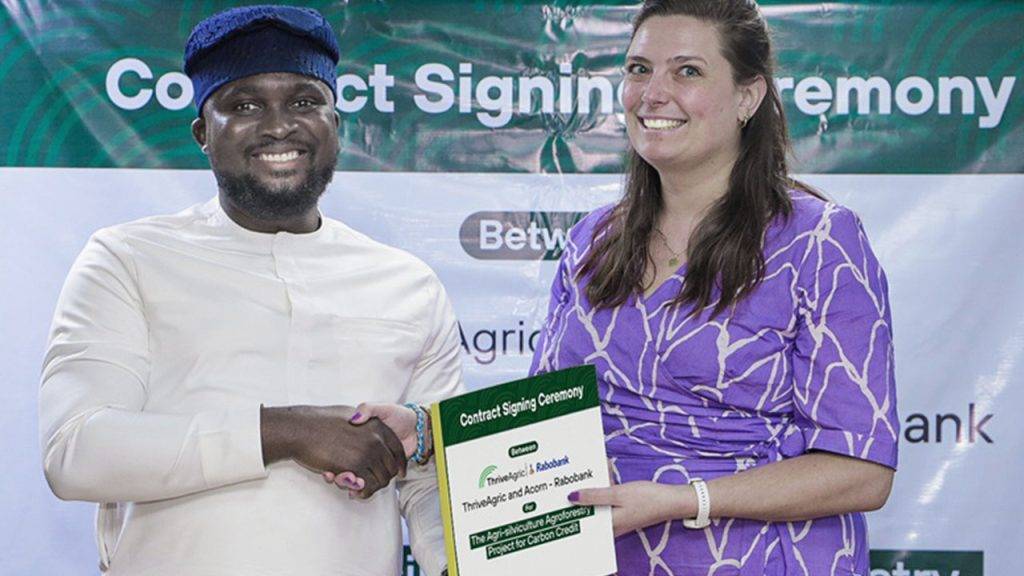
  • ThriveAgric and Acorn Rabobank Collaborate to Support 30,000 Nigerian Farmers

    ThriveAgric and Acorn Rabobank Collaborate to Support 30,000 Nigerian Farmers

    ThriveAgric, a pioneering Nigerian agritech startup, has unveiled a groundbreaking collaboration with Acorn Rabobank aimed at empowering over 30,000 smallholder farmers.

    This strategic partnership focuses on providing carbon credits to enhance sustainable agroforestry practices and foster the development of the global carbon market. The initiative is poised to not only revolutionize agricultural practices but also yield substantial benefits for the participating Nigerian farmers, generating an estimated $56 million in revenue and mitigating 1.3 million metric tonnes of carbon emissions.

    Spanning across nine states in Nigeria, namely Kaduna, Gombe, Adamawa, Taraba, Bauchi, Jigawa, Niger, Nassarawa, and Kano, this ambitious project underscores ThriveAgric’s unwavering commitment to promoting sustainable agriculture while uplifting rural communities.

    “The carbon market presents vast opportunities, and it’s imperative that African farmers are not left behind,” emphasized Ayo Arikwe, Chief Technology Officer at Thrive Agric.

    As of October 2023, the carbon credit market boasted a staggering valuation of $103 billion, with projections indicating a robust average annual growth rate of 14.8% through 2032. Despite Africa’s immense potential in this domain, the continent presently accounts for a mere 2% of the market’s capacity. This glaring disparity highlights the pressing need for initiatives like the one spearheaded by ThriveAgric and Acorn Rabobank.

    In low-income countries, particularly in Africa, farmers often face barriers to participating in the carbon credit market, ranging from limited awareness to securing access. ThriveAgric aims to address these challenges head-on. Samirah Bello, Head of Partnerships at ThriveAgric, emphasized that every farmer involved in their program will have the opportunity to diversify their income streams by harnessing carbon credits.

    “For instance, a farmer managing one hectare of land stands to earn up to $1,700 in revenue from carbon credits annually. With newly planted trees, this revenue is poised to increase over time as the trees mature, capturing more carbon and generating additional credits,” added Bello.

    The collaborative efforts between ThriveAgric and Acorn Rabobank are poised to combat climate change by enhancing soil health, increasing productivity, and bolstering carbon capture. Participating farmers can anticipate improved crop yields, reduced post-harvest losses, and the integration of an additional income source through carbon credits, among other climate-smart initiatives.

    ThriveAgric, which boasts a robust network of over 800,000 smallholder farmers spanning Nigeria, Ghana, Kenya, and Uganda, is also pioneering the Dorewa platform. This innovative solution aims to empower other climate-focused startups across Africa to embark on their carbon journey.

    “Dorewa is designed to facilitate the entry of more farmers across Africa into the carbon credit landscape,” explained Arikwe.

    Acorn Rabobank, the climate-focused subsidiary of Dutch banking giant Rabobank, is actively engaged in climate change mitigation efforts across Ghana, Kenya, Zambia, Rwanda, and Tanzania. Through collaborative ventures like the one with ThriveAgric, Acorn Rabobank is spearheading transformative change in agricultural practices while fostering sustainable development across Africa.

  • Baobab Network To Empower African Startups with Reflector Marketing Acquisition

    Baobab Network To Empower African Startups with Reflector Marketing Acquisition

    Baobab Network, a prominent early-stage investor dedicated to fostering startups across Africa, has acquired Reflector Marketing, a leading strategy and branding agency headquartered in South Africa.

    Since its inception in 2019, Baobab Network has been at the forefront of empowering startups through capacity building and fundraising endeavors, exemplified by its recent decision to increase standard investments to US$50,000. With an impressive portfolio encompassing 50 startups, Baobab Network has established itself as a key player in the African startup ecosystem.

    On the other hand, Reflector Marketing, founded in 2022 by Klyne Maharaj, has garnered recognition as a specialized agency offering strategic marketing, branding, and digital services tailored specifically to the unique needs of startups.

    The acquisition of Reflector Marketing by Baobab Network signifies a strategic move aimed at furthering the investor’s ambitious plans and long-term commitment to fostering entrepreneurship across Africa. Toby Hanington, co-founder of Baobab, emphasized the significance of this acquisition in aligning with the company’s vision of becoming a leading early-stage investor on the continent.

    Hanington remarked, “Baobab has made no secret that we want to become the leading early-stage investor across Africa. To do so, we’re always thinking about what value we create for founders, on top of our capital investment. We’ve worked with the Reflector team since early 2023, and the move to acquire them is a testament to the work they’ve already done with our portfolio. We have incredibly ambitious long term growth plans and bringing in Klyne and his team will definitely expedite those.”

    As part of the acquisition, Klyne Maharaj and his team will join Baobab, with Maharaj assuming the role of director of the accelerator. This integration is expected to bolster Baobab’s capacity to provide comprehensive in-house support to its portfolio companies, thereby further enhancing their growth prospects and investment readiness.

    Maharaj expressed enthusiasm about the synergies between the two entities, stating, “Our goal has always been to help the world’s best startups nail their positioning, win their markets, and raise capital to fuel their growth. Now, as part of Baobab, we’re excited to focus our efforts exclusively on supporting entrepreneurs in Africa. Baobab already has a phenomenal team that have made a profound impact on Africa’s venture ecosystem. Together, we’ll build the most powerful capabilities team of any early-stage investor on the continent.”

    In summary, Baobab Network’s acquisition of Reflector Marketing represents a strategic consolidation of resources aimed at bolstering support for startups across Africa, signaling a promising step towards fostering innovation and entrepreneurship on the continent.

  • Kenyan Fintech Pezesha and MarketForce Resolve Dispute After Legal Struggle

    Kenyan Fintech Pezesha and MarketForce Resolve Dispute After Legal Struggle

    After a protracted six-month legal tussle, Kenyan fintech startup Pezesha and B2B eCommerce platform MarketForce have finally reached a settlement outside the courtroom.

    In a unique turn of events, MarketForce will leverage its intangible assets, valued by Pezesha, to offset the debt owed.

    This resolution follows Pezesha‘s petition for MarketForce’s liquidation due to significant outstanding debts, a stark contrast to their initial collaboration aimed at enhancing customer inventory and distribution channels.

    The genesis of this conflict lies in MarketForce’s mounting funding challenges, leading to difficulties in meeting financial obligations to Pezesha, its former financier. These strains ultimately led to Pezesha’s legal action to recoup its dues.

    However, the narrative took a surprising twist as the two entities reconciled during the Harambeans Global Summit in Maasai Mara. Hilda Moraa, Pezesha’s founder, and Tesh Mbaabu, MarketForce’s CEO, engaged in constructive dialogue, culminating in an agreement to resolve their differences amicably.

    Reflecting on the ordeal, Mbaabu admitted to underestimating the complexities of scaling and acknowledged the need for better communication amidst funding setbacks. He emphasized the importance of resilience and pledged to cultivate a collaborative atmosphere going forward.

    In parallel, Moraa emphasized the significance of diplomacy and relationship prioritization, lamenting the lack thereof in handling the dispute. Both leaders recognized the invaluable lessons learned and committed to fostering a culture of transparency and cooperation.

    Meanwhile, Pezesha received a substantial $500,000 grant from the US International Development Finance Corporation (DFC), aimed at bolstering its lending capabilities to small businesses across sub-Saharan Africa. This injection of funds will enable Pezesha to leverage cutting-edge technologies like data science and machine learning to refine its lending practices and contribute to economic empowerment in the region.

  • Remedial Health Launches App for African Pharmacies with Digital POS & Barcode Scanner

    Remedial Health Launches App for African Pharmacies with Digital POS & Barcode Scanner

    Embarking on a mission to streamline Africa’s pharmaceutical landscape, Remedial Health, a pioneering health tech startup, has introduced an enhanced iteration of its consumer-facing application.

    This innovative platform is poised to serve as an operational backbone for neighborhood pharmacies and Proprietary Patent Medicine Vendors (PPMVs) continent-wide.

    Key Features of the Remedial Health App:

    The upgraded app boasts a plethora of features including a digital Point of Sale (POS) terminal for seamless payment processing, virtual business accounts for payment reception, an integrated barcode scanner for swift product sales recording, and a store-switch functionality facilitating the effortless management of multiple outlets. Additionally, it offers robust inventory management solutions for restocking and identifying products nearing expiration.

    Furthermore, the app furnishes comprehensive financial reporting tools to monitor profit and loss, alongside data analytics capabilities aimed at informed decision-making.

    The Significance of the Remedial Health App:

    Despite commanding a significant chunk, approximately 85 percent, of retail medicine sales within Africa’s burgeoning pharmaceutical sector, neighborhood pharmacies and PPMVs grapple with the absence of tailored digital solutions tailored to their unique operational needs. This gap impedes their ability to optimize efficiency and profitability.

    Moreover, reliance on archaic paper-based inventory and sales management processes exacerbates the challenge, depriving manufacturers of crucial insights into consumer behavior vital for production and distribution strategies.

    Tailored Solutions for Africa:

    Crafted with the nuances of Africa’s healthcare ecosystem in mind, the Remedial Health app proffers bespoke features engineered to foster operational excellence and drive business growth.

    Kicking off in Nigeria, healthcare enterprises gain access to a curated selection of medications while managing sales and inventory seamlessly through a unified platform. This liberation from cumbersome administrative tasks enables pharmacies and PPMVs to devote more resources to serving their clientele and communities effectively.

    Furthermore, the app empowers Remedial Health to furnish real-time market behavior data to manufacturers, amplifying profitability and optimizing decision-making throughout the value chain.

    In the words of Samuel Okwuada, CEO, and co-founder of Remedial Health, “Neighborhood pharmacies and PPMVs serve as the frontline of healthcare delivery in Africa. However, they’ve historically been underserved in terms of operational support. Our aim is to equip these essential service providers with the requisite tools to navigate daily operations efficiently.”

    Achievements of Remedial Health:

    In 2023, Remedial Health facilitated the sale of over 300 million individual medicine packs to 7,500 healthcare facilities, spanning all 36 states of Nigeria. Notably, customers witnessed a remarkable 30 percent uptick in profits on average, gaining access to a meticulously curated catalog of over 8,000 vetted products at competitive prices. Leveraging same-day delivery and inventory financing, these enterprises minimized cash-flow friction, maximizing sales opportunities in the process.

    As Remedial Health continues its trajectory of innovation and empowerment, the landscape of African healthcare commerce stands poised for transformation, heralding a future where efficiency and profitability converge seamlessly.

  • Y Combinator Backs African Travel Startup Triply With $500,000 Investment

    Y Combinator Backs African Travel Startup Triply With $500,000 Investment

    Y Combinator, the renowned US startup accelerator, has injected $500,000 into Triply, an emerging African travel platform headquartered in Kenya.

    Founded by Peter Wachira and Collins, Triply caters to travel businesses across Africa, offering essential tools for seamless payment processing, operational streamlining, and access to financial services.

    Wachira, a seasoned entrepreneur with prior ventures in vacation rental management, joins forces with Collins, bringing expertise from the realms of Fintech and insuretech startups. Triply’s comprehensive suite of business solutions spans accounting, payroll management, a centralized inbox, secure payment gateways, a versatile multi-currency wallet, robust analytics, and an efficient channel management system.

    Delving into the statistics, Africa’s travel sector boasts a staggering $300 billion valuation, with a significant chunk contributed by domestic travelers, who account for 66% of the continent’s travel expenditure.

    Expressing enthusiasm for the collaboration, Triply’s Founder and CEO, Peter Wachira, highlighted the transformative potential of the partnership with Y Combinator. He emphasized the investment’s dual role in solidifying Triply’s position as a premier solution for both businesses and travelers while empowering the company to tailor solutions that cater specifically to the needs of the Kenyan and broader African markets.

  • 5 Reasons Ghanaians Should Invest With The Phundit App

    5 Reasons Ghanaians Should Invest With The Phundit App

    In personal finance management, finding the right tool to navigate the often complex landscape of budgeting, saving, and investing can be daunting. However, with innovative solutions like Phundit, Ghanaians now have access to a streamlined platform that simplifies financial management and empowers individuals to make informed decisions about their money. Founded by Peter Tokor in response to his own struggles with financial accountability, Phundit stands out as a beacon of financial wellness in Africa. Here are 5 compelling reasons Ghanaians should consider investing with the Phundit app.

    1. Enhanced Financial Literacy:

    One of the cornerstone features of Phundit is its commitment to improving financial literacy among users. Before diving into the world of budgeting and investing, Phundit encourages individuals to take a Financial Health Test. This assessment provides valuable insights into one’s understanding of financial concepts and serves as a foundation for tailored financial guidance. By equipping users with essential knowledge and resources, Phundit empowers them to make informed decisions and build a solid financial future.

    2. Efficient Budgeting Tools:

    Effective budgeting is key to achieving financial stability, and Phundit offers a suite of tools to simplify this process. With intuitive budgeting features, users can easily track their income and expenses, set spending limits, and identify areas for potential savings. By providing a clear overview of one’s financial standing, Phundit enables users to make strategic adjustments to their spending habits and work towards their financial goals with confidence.

    3. Guidance Towards Investment Goals:

    Investing can seem daunting for many, especially those new to the world of finance. Phundit acts as a trusted guide on the journey towards investment success. Through personalized recommendations and expert insights, the app helps users identify investment opportunities aligned with their financial goals and risk tolerance. Whether saving for retirement, building wealth, or planning for future expenses, Phundit equips users with the tools and knowledge needed to navigate the complexities of the investment landscape effectively.

    4. Facilitation of Emergency Funds:

    Life is unpredictable, and having a financial safety net in place is essential for weathering unexpected expenses or emergencies. Phundit recognizes the importance of an emergency fund and provides users with the tools to establish and maintain one. By setting aside funds for unforeseen circumstances, individuals can mitigate financial stress and maintain stability even in the face of adversity. With Phundit’s support, Ghanaians can proactively prepare for the unexpected and safeguard their financial well-being.

    5. Community and Support:

    Beyond its array of features and tools, Phundit fosters a sense of community among its users. Through forums, educational resources, and interactive sessions, individuals can connect with like-minded peers, share insights, and learn from each other’s experiences. This sense of camaraderie and support creates a conducive environment for personal growth and financial empowerment, ensuring that users feel motivated and supported on their journey towards financial success.

    Phundit represents a paradigm shift in personal finance management, offering Ghanaians a comprehensive solution for achieving financial wellness. From enhancing financial literacy to providing practical tools for budgeting, saving, and investing, Phundit empowers users to take control of their financial destiny. By leveraging the power of technology and innovation, Phundit is poised to make a meaningful impact on the lives of Ghanaians and Africans, guiding them toward a brighter and more prosperous future.

  • Is FENIX360 The Music Industry’s Next Big Revolutionary App After TikTok & Triller?

    Is FENIX360 The Music Industry’s Next Big Revolutionary App After TikTok & Triller?

    Across the arts – there has traditionally existed highly inequitable compensation structures that favored the middleman and ensured that the creators got very little if anything.

    With revolutionary apps such as TikTok and Triller slowly replacing radio as the go-to in discovering the next big thing in music, perhaps it is about time we considered the advent of a groundbreaking app that will this time transform the music industry’s antiquated economic model. Admittedly a rather ambitious goal, this is exactly what FENIX360 dares to achieve.

    Launched globally on August 2nd, 2020, FENIX360 essentially is an artist-centric social media platform that provides multiple ways for artists to significantly improve their income while providing users with a more engaging & fun experience. 

    FENIX360

    The application’s ecosystem is powered by the FNX coin. With FENIX360, artists will earn money from 80% of the ad revenue, 95% of NFT’s, live streaming, merchandise, experiences & tickets, etc. 

    “We’ll be very happy if others defensively duplicate our obsession with the welfare of artists,” remarked Allan Klepfisz Founder & CEO. “We don’t at all want or expect support for the artists to end with us. We indeed hope to be copied widely enough that all exploitative models are extinguished. But we’re not going to make it easy to keep up with us. We’ll keep on adding creative sources of revenue & powerful tools for artists.”

    Central to the FENIX360 ecosystem, is the ability for an artist or indeed anybody, to create a shareable app in 20 minutes or less, that represents them in a complete, 360-degree manner. This app can then be shared via a simple self-selected URL which enables instant mobile installation. 

    Lance Ford, President & Founder observed: “With this simplicity, we hope to create a generation of enthusiastic app builders. It’s a great way to present yourself to fans or friends who are then encouraged to download the full app from the app stores. People love being efficiently creative. We think having your own app so readily, will excite them.”

    As perhaps the first global consumer app, to incorporate cryptocurrency, the FENX360 ecosystem is extremely simple for artists & fans alike. 

    “We wanted to be one of the pioneers of eliminating all barriers within crypto. You can easily purchase the FNX360 coin all over the app, you can easily use it for any purchase, artists can easily get paid without having to set up an e-commerce system and it’s as close to frictionless as one can get” explained Tomas Varga, Fenix Partner & Head of Blockchain Strategy.

    FENIX360 is proudly represented by a rapidly growing group of 6000+ FENIX GLOBAL ARTIST AMBASSADORS. 

    Completely disrupting the music and creative industries is no walk in the park. Only time will tell if FENIX360 is indeed the game-changer it sets out to be. One thing is however certain, the success of the FENIX360 project will spell curtains for exploitative industry models which will have to evolve or risk being sidelined for good.

  • South African Escrow Startup TradeSafe Secures  Funding from Standard Bank

    South African Escrow Startup TradeSafe Secures Funding from Standard Bank

    TradeSafe, a South African online escrow platform that safeguards the buyer’s funds in trust in a transaction involving two or more parties, has raised an undisclosed amount of funding from Standard Bank in return for a 35 per cent equity stake.

    According to an article published by Disrupt Africa in 2018, the startup’s escrow platform ensures funds are only released to the seller, and other approved beneficiaries, once the buyer receives the goods or services in the agreed condition.

    Established in 2013, TradeSafe is credited as the oldest African escrow platform, and also the first digital escrow organisation globally to offer an API gateway which allows for online marketplaces and stores to offer escrow payments to customers.

    TradSafe now has funding from Standard Bank. The bank acquired a 35 per cent equity stake, with the investment set to allow TradeSafe to increase the types of transactions it can carry out.

    “Both TradeSafe and Standard Bank realised the necessity for a fast, secure, and affordable escrow solution in the wake of the increasing volume of scams, fraud and unpaid invoice payments in South African commerce. Our fees come in at a fifth of what a reputable law firm or bank would charge in a transaction,” said TradeSafe chief executive officer (CEO) Jethro O’Brien.

    “The bank will provide a second release payment function. This means that with our increased governance, security and credibility, TradeSafe will now be able to target commodity and M&A transactions greater than ZAR25 million (US$1.5 million.”

    As part of the investment, Standard Bank has appointed two non-executive directors to the TradeSafe board. Standard Bank, which has invested in other South African fintechs such as Payment24 and Nomanini, has also taken on management oversight of TradeSafe’s escrow account and is fully involved in the process for payment instructions that TradeSafe initiates.   

    TradeSafe has recently overhauled its platform, and its API offering now also incorporates new payment gateways such as SnapScan and Ozow. 

    “We also employed Standard Bank’s proprietary host-to-host technology which allows for automated payments,” said O’Brien.

    Kuben Chetty, head of client solutions at Standard Bank, said there was a strong need for a digital escrow solution within South Africa given the rise of digital transactions and especially as buyers and sellers seek ways to mitigate transaction fraud. 

    “Standard Bank is very excited with its investment in TradeSafe Escrow and this provides both parties the opportunity to explore ways to leverage each other’s capabilities to help their clients transact securely,” Chetty said.

    We are excited to see what TradSafe does with this investment from Standard Bank.

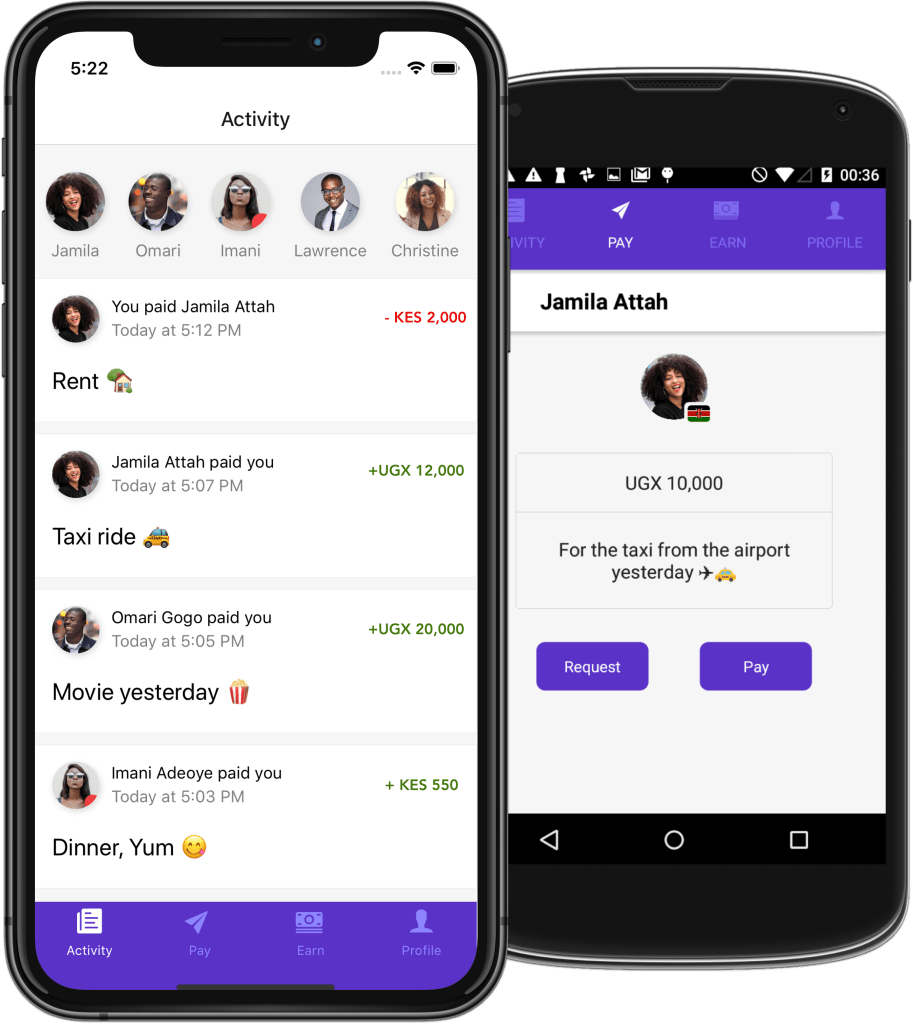
  • African Payment Startup Chipper Cash Raises $13.8M Series A Funding

    African Payment Startup Chipper Cash Raises $13.8M Series A Funding

    African cross-border fintech startup Chipper Cash has closed a $13.8 million Series A funding round led by Deciens Capital and plans to hire 30 new staff globally.

    The raise caps an event filled run for the San Francisco based payments company, founded two years ago by Ugandan Ham Serunjogi and Ghanaian Maijid Moujaled.

    The two came to America for academics, met in Iowa while studying at Grinnell College and ventured out to Silicon Valley for stints in big tech: Facebook for Serunjogi and Flickr and Yahoo! for Moujaled.

    The startup call beckoned and after launching Chipper Cash in 2018, the duo convinced 500 Startups and and Liquid 2 Ventures — co-founded by American football legend Joe Montana — to back their company with seed funds.

    Two years and $22 million in total capital raised later, Chipper Cash offers its mobile-based, no fee, P2P payment services in seven countries: Ghana, Uganda, Nigeria, Tanzania, Rwanda, South Africa and Kenya.

    “We’re now at over one and a half million users and doing over a $100 million dollars a month in volume,” Serunjogi told TechCrunch on a call.

    Chipper Cash does not release audited financial data, but does share internal performance accounting with investors. Deciens Capital and Raptor Group co-led the startup’s Series A financing, with repeat support from 500 Startups and Liquid 2 Ventures .

    Deciens Capital founder Dan Kimmerling confirmed the fund’s lead on the investment and review of Chipper Cash’s payment value and volume metrics.

    Parallel to its P2P app, the startup also runs Chipper Checkout: a merchant-focused, fee-based mobile payment product that generates the revenue to support Chipper Cash’s free mobile-money business.

    The company will use its latest round to hire up to 30 people across operations in San Francisco, Lagos, London, Nairobi and New York — according to Serunjogi.

    Chipper Cash

    Chipper Cash has already brought on a new compliance officer, Lisa Dawson, whose background includes stints with the U.S. Department of Treasury’s Financial Crimes Enforcement Network and Citigroup’s anti-money laundering department.

    “You know in the world we live in the AML side is very important so it’s an area that we want to invest in from the get go,” said Serunjogi.

    He confirmed Dawson’s role aligned with getting Chipper Cash ready to meet regulatory requirements for new markets, but declined to name specific countries.

    With the round announcement, Chipper Cash also revealed a corporate social responsibility component to its business. Related to current U.S. events, the startup has formed the Chipper Fund for Black Lives.

    “We’ve been huge beneficiaries of the generosity and openness of this country and its entrepreneurial spirit,” explained Serunjogi. “But growing up in Africa, we’ve were able to navigate [the U.S.] without the traumas and baggage our African American friends have gone through living in America.”

    The Chipper Fund for Black Lives will give 5 to 10 grants of $5,000 to $10,000. “The plan is to give that to…people or causes who are furthering social justice reforms,” said Serunjogi.

    In Africa, Chipper Cash has placed itself in the continent’s major digital payments markets. As a sector, fintech has become Africa’s highest funded tech space, receiving the bulk of an estimated $2 billion in VC that went to startups in 2019.

    Those ventures, and a number of the continent’s established banks, are in a race to build market share through financial inclusion.

    By several estimates — including The Global Findex Database — the continent is home to the largest percentage of the world’s unbanked population, with a sizable number of underbanked consumers and SMEs.

    Increasingly, Nigeria has become the most significant fintech market in Africa, with the continent’s largest economy and population of 200 million.

    Chipper Cash expanded there in 2019 and faces competition from a number of players, including local payments venture Paga. More recently, outside entrants have jumped into Nigeria’s fintech scene.

    In 2019, Chinese investors put $220 million into OPay (owned by Opera) and PalmPay — two fledgling startups with plans to scale first in West Africa and then the broader continent.

    Over the next several years, expect to see market events — such as fails, acquisitions, or IPOs — determine how well funded fintech startups, including Chipper Cash, fare in Africa’s fintech arena.

    Source: https://techcrunch.com/

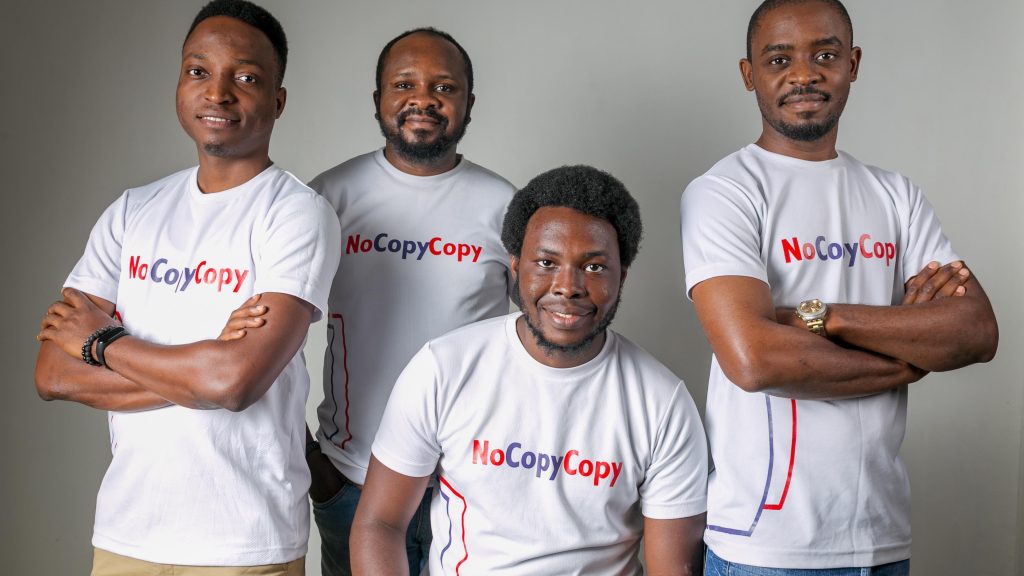
  • Get To Know NoCopyCopy, A Nigerian Startup Fighting Plagiarism in the Educational Sector

    Get To Know NoCopyCopy, A Nigerian Startup Fighting Plagiarism in the Educational Sector

    NoCopyCopy announced the launch of its new platform to fight theft and plagiarism in the Nigerian educational sector.

    This comes on the heels of growing concern about the quality of education in Nigerian institutions which inadvertently produces poor quality graduates who are unable to create original content and material. Through its plagiarism checking platform, NoCopyCopy intends to discourage lazy research and intellectual theft while encouraging people and students who produce unique content.

    Stephen Ojji

    Speaking on his drive for creating the platform, CEO and Co-founder of NoCopyCopy, Stephen Ojji, shared how excited he and his team are to be contributing their part to improving Nigeria’s educational system. Stephen, a long term player in the educational and training sector, expressed the objective of creating the NoCopyCopy platform by saying “We are promoting originality. There is no shame in building on another person’s work. However, it is important to give credit where it is due. We want to encourage more people to keep putting out intellectual work. If you want to use a person’s work, let people know. With NoCopyCopy, you can find out where similar work has been done on an idea you are pursuing, learn from those works and reference them properly.”

    With NoCopyCopy, bloggers, students, corporate organisations, academics and individuals can assess the originality of written work and at the same time check to see if any of their original work has been used without permission by other people or organisations.

    With a combined 25 years experience in the education technology space in Nigeria, Stephen and his Co-Founders are committed to reducing the alarming rate of plagiarism in tertiary institutions, corporate organisations and down to the writers’ community in Nigeria. The co-founders consist of Ogho Emore, the COO with almost a decade of hands-on experience in the educational technology sector, Yole Odior, a full stack developer who occupies the role of CTO and oversees the technology interest and strategies of the business.

    According to Stephen Ojji, “Plagiarism has eaten deep into the fabric of Nigeria’s educational and corporate scene. We’ve seen situations where PhD students and even bloggers lift other people’s work in a similar field and present them as theirs. “About five years ago, a top government official gave a speech which later turned out to have been lifted from the thesis of a lecturer in the South-East. I imagine his speechwriter had something to do with that. We shame professors for not being rich, but how can they be rich when their work is used without credit. This is one of the reasons why we built our platform. The NoCopyCopy plagiarism checker can detect plagiarism from billions of web pages as well as from international academic databases in a matter of seconds.”

    The NoCopyCopy plagiarism checker is built on an extensive understanding of the Nigerian educational system and the Nigerian market as a whole. The platform offers affordable plans for students, freelance writers, corporate organizations, among others.

    Source: unorthodoxdigital.com